JEHOVAH NISSI – THE LORD IS MY BANNER OF VICTORY
Jehovah-Nissi is more than just a name of God. It is a banner or a flag that represents His power, presence, protection and Love over His people, in times of war and in times of peace. In Hebrew, the word “Nissi” means Refuge or Lifting. God’s name Jehovah Nissi can be translated as The Lord is my Banner of Victory or the Lord is my Exaltation, the Lifter of my head. In times of trouble and uncertainty, by faith, we raise the banner of Jehovah-Nissi and trust in His faithfulness and promise of victory. In Exodus 17:1-16, the banner called Nissi, is a Symbol of Victory. It was a reminder of how they won the battle. It was not Moses or Joshua, but it was Jehovah who won the battle. It was the Lord who led them into the battle, who protected them, that gave them the victory. “Many are they who say of me, “There is no help for him in God.” Selah! 3 But You, O Lord, are a shield for me, My glory and the One who lifts up my head” (Ps 3:2,3). When a man suffers for a long time, in His mercy, God lifts up his head; He restores him back to his former status. Lessons: God does not need a great army or sophisticated weapons. God used an old man with hands lifted to heaven, praying and interceding, to defeat the great army of the Amalekites. God alone takes all the glory for all our successes and achievements in life. Jehovah Nissi is the revelation of Praying to Victory!
What is the background of the revelation of God’s name Jehovah Nissi? Three days after the passing thru the Red Sea, God’s people arrived as a place called Marah, meaning Bitter. After the miracle of changing bitter water into sweet water and the revelation of God’s name as Jehovah Rapha, the Israelites now rested at Elim, where they camped near a place of 12 wells of water and 70 palm trees (Exo 15:27). The word Elim means Trees, suggesting an oasis, a place of abundance. God led them here to experience rest and to be refreshed. In the Bible, numbers 12 and 70 both mean completeness, like the 12 tribes of Isreal. God’s people rested to have new strength for the journey ahead. Lessons: God’s leading in life passes thru periods of trials and periods of rest in between. Sabbath is a day of rest when we are commanded to stop working for ourselves and serve God. Jesus alone gives eternal rest. He is the Lord of the Sabbath. He said: “Come to Me, all you who labor and are heavy laden, and I will give you rest” (Matt 11:28). The call of Jesus is universal and personal. To answer this call, you need active faith. You must believe that Jesus is able to give you rest from the guilt of sin, from religious oppression, from worries of life.
After the rest at Elim, God’s people move on towards Mount Sinai. They start complaining of hunger, testing God again (Exodus 16). God provided quail for them to eat. He also started a new “diet”. He fed them with Manna, a supernatural food that looks like seeds on the ground. The word “manna” means “what is this?”. This food came with specific instructions on how to be gathered. God tested them to see if they obey Him or not. Most people disobeyed God’s instructions and failed His test again. The next leg in the journey was Rephidim (Exodus 17:1-7). There was no water. God’s people started complaining again. Moses prays. God shows him a Rock. He tells Moses to strike the rock with the same rod he used to punish the Egyptians. Moses obeys and water comes out from the rock to quench the people’s thirst. Paul tells us that the Rock was Christ Crucified. “they drank of that spiritual Rock that followed them, and that Rock was Christ” (1Cor 10:4). This was a miracle, spiritual water provided by Christ Himself, who accompanied them in the wilderness. Lessons: We need the water of life Christ provides thru the study of God’s Word and prayer. We are never alone in the journey of life. Selah!
This is the background of the story, just before God’s people are attacked by the Amalekites (Exodus 17:8-16). After the people experienced God’s care in providing rest, food and water in the wilderness, they now trust God enough to defend them in their first battle since they left Egypt. The Amalekites were “the first among the nations” to attack them (Nu 24:20). The attack was totally unprovoked. They were the descendants of Amalek, who was the grandson of Esau (Gen 36:12). The Israelites and the Amalekites were relatives. Both came out from Isaac. But they remained enemies to the end. The Amalekites were settled close to that area. They surely knew that God promised the descendants of Jacob to give them the Promised Land. The Israelites were not a direct threat to them. They were just passing by. But they still attacked them, especially the old, the weak, the women and the children. This was a cowardly attack. The people kept their baggage at the back. The Amalekites were looking for things to steal. In the process, they killed the weak people at the back. Spiritually, they attack “the strugglers”, those who have trouble in life, financial burdens, or emotional upsets. God vowed to punish the Amalekites. From generation to generation there shall be no mercy for them. “Remember what the Amalekites did to you along your way from Egypt, how they met you on your journey when you were tired and weary, and they attacked all your stragglers; they had no fear of God. When the LORD your God gives you rest from the enemies around you in the land that He is giving you to possess as an inheritance, you are to blot out the memory of Amalek from under heaven. Do not forget!” (Deut 25:17-19).
God commanded His people: “Go out, fight with Amalek!” This was the first experience of warfare for ancient Israel. They had lived for hundreds of years as slaves, and God fought the Egyptians for them. Now they had to learn to rely on God as they fight their first military battle. Moses commanded Joshua to take some able men and fight the Amalekites in the valley. He will take the rod of God with which he did miracles in Egypt, go on a hill and lift it there. “So, Joshua did as Moses said to him”. This is the first passage that mentions Joshua. We find him obeying Moses. The name “Jesus” is simply the Greek way of pronouncing the name Joshua. It’s the same name. Joshua is a type of Jesus. He fought the enemies of the people of God. He led God’s people into the Promised Land.
Moses, together with Aaron, and Hur went up to the top of the hill: They did this for three reasons: they could see their people, they could be seen by the people, and so that they could worship God and pray. Aaron was the older brother of Moses, and some think that Hur was Miriam’s husband, Moses’ brother-in-law. Joshua was fighting with the sword. Moses supported the battle behind the scenes, busy in prayer. Moses observed something strange: “And so it was, when Moses held up his hand, that Israel prevailed”. The fate of Israel in battle depended on Moses’ intercession because when he prayed Israel prevailed and when he stopped praying Amalek prevailed. Moses “held up his hand” in a position of prayer. This amazing passage shows us that life or death for Israel depended on the prayers of one man. As a young man, Moses thought the only way to win a battle was to fight directly (Ex 2:11-15). Now, Moses, 80 years old, lets Joshua fight while he does the most important work: pray for victory!!! Moses’ hands became tired. Supporting the battle in prayer was difficult. Moses needs help from other believers!! Lessons: We think fighting is hard work, and praying is easy work, but true prayer is also hard work. We too must “pray without ceasing” (1Thess 5:17). Paul described the ministry of Epaphras as always laboring fervently for you in prayers (Col 4:12). Aaron and Hur came alongside Moses and literally supported his hands up in prayer. They became a team in intercession. Their help was successful: Moses’ hands were steady until the sun went down and the victory won. Though this was Moses’ work to do, it was more than he could do by himself. Moses alone could not win the battle of prayer. He needed others to come by his side to strengthen him in labor and prayer. Moses, with his stretched-out hands, is a figure of Christ on the cross, suffering for mankind, getting a complete victory over sin and Satan. Please observe that Joshua still had to fight. Praying Moses did not eliminate what Joshua had to do. The battle was won with prayer, but also through the usual work of the army, led by Joshua. Lessons: This amazing passage shows us the great importance of prayer. Life and death depend upon prayer. Often, God’s people are defeated today because they do not pray well about God’s work. God takes it personally when the enemy attacks us. Christ died on the Cross to give us the victory against sin, death and Satan. Selah!
The reason why God was so angry it was because Amalek was the first nation to attack Isreal. By fighting Isreal, God said they fight against Him. God continued His war against them but gave them much time to repent of this great sin of attacking their cousin, Israel. But they refused to repent. Based on the command to fight the Amalekites, God commanded King Saul to destroy them. He only obeyed partially. He left the king and others alive. Because of this disobedience, King Saul lost his throne (1Sam 15:2-9; 28:18). The Amalekites were destroyed during the reign of Hezekiah (1Chr 4:43). Some survived. Haman, the Agagite, the enemy of the Jews, during the time of Queen Esther, almost succeeded to destroy all the Jews but God’s hand stopped him (Esther 3:1). The Amalekites are a picture of Satan or our flesh. “Amalek” constantly battles against the spirit and must be struggled against until completely conquered (Galatians 5:17).
SLAVERY MENTALITY
One of the main reasons why God revealed Himself as Jehovah Nissi, was because He wanted His people to find a new identity. Before now, they had a slavery mentality. It was their mind set when they lived in Egypt for 400 years. That is why when challenges came on the way to the Promised Land, they were dreaming about going back, to eat the cucumbers in Egypt. Slave mentality is a stronghold that blocks the way to success. It is lack of freedom. Freedom is defined as the power, the right to think, speak and act the way you want to, without any influence from outside. No one controls your mind. The word ‘Freedom’ comes from a German word meaning “Love or Friend”. In other words, Freedom manifests as your choice to Love any Friend you desire. A slave is a person who is physically or mentally controlled by another person or a thing. Slavery mentality is a negative mindset of failure. It is a spiritual bondage. It says that you are born poor and will stay poor; you will never be rich or free; you just accept the suffering and quietly endure it having no hope for a change.
These are some ways to describe a slavery mentality:
*You listen too much to negative words about you. You have inferiority complexes about your looks, social or financial status.
*You obey too quickly what people tell you to do, without thinking or praying. You’re people pleaser. You are foolish with money and work!
*You are satisfied to be ignorant. You are not interested in reading the Bible or books to grow in knowledge.
*You are bound to your comfort zone; lazy; you don’t take risks; you don’t dream of a better life, and you don’t do something about it.
*You don’t think. You allow others to think for you. You always help people achieve their dreams, but you have no dream of your own.
What is the solution? Surrender your life to Christ! Renew your mind! “Do not be conformed to this world, but be transformed by the renewing of your mind, that you may prove what is that good and acceptable and perfect will of God” (Rom 12:2). Pray that your mind will become the mind of Christ. Study the Bible and good Christian books. Change is not easy, but you must decide to change today. Set yourself free from a slave mentality and grow in knowledge of God. Let go of the losers around you. Look for successful born-again Christians. Look for a good spiritual mentor. Be active in serving God in the local church! With the Help of the Holy Spirit, you can do it!
In Exodus 17 we see an example of God’s power and man’s effort working together. Moses struck the rock, but only God could bring the water. Joshua fought, Moses prayed, but only God gave the victory over Amalek for His glory! God’s Word does not say: “Israel is my banner, Moses is my banner or Joshua is my banner”. Rather it was Yahweh-Nissi: THE-LORD-IS-MY-BANNER. We sometimes are even more aware of the power and the help of God when we work together with Him than when God does the work all by Himself. Jehovah-Nissi came after the battle with Amalek, not after the dead Egyptians at the Red Sea. The banner of Jehovah Nissi is a cure against pride that may arise after the victory. God’s people now needed to be humble and have a new identity. They are now more than conquerors. Jehovah Nissi, God is my banner of victory! Glory! Jesus is Moses seated on high and making intercession for people. Jesus is the Rock that was stroked and produced the water of Life. Jesus is Joshua. Jesus is our banner. He alone receives all the glory!
BANNERS AND FLAGS
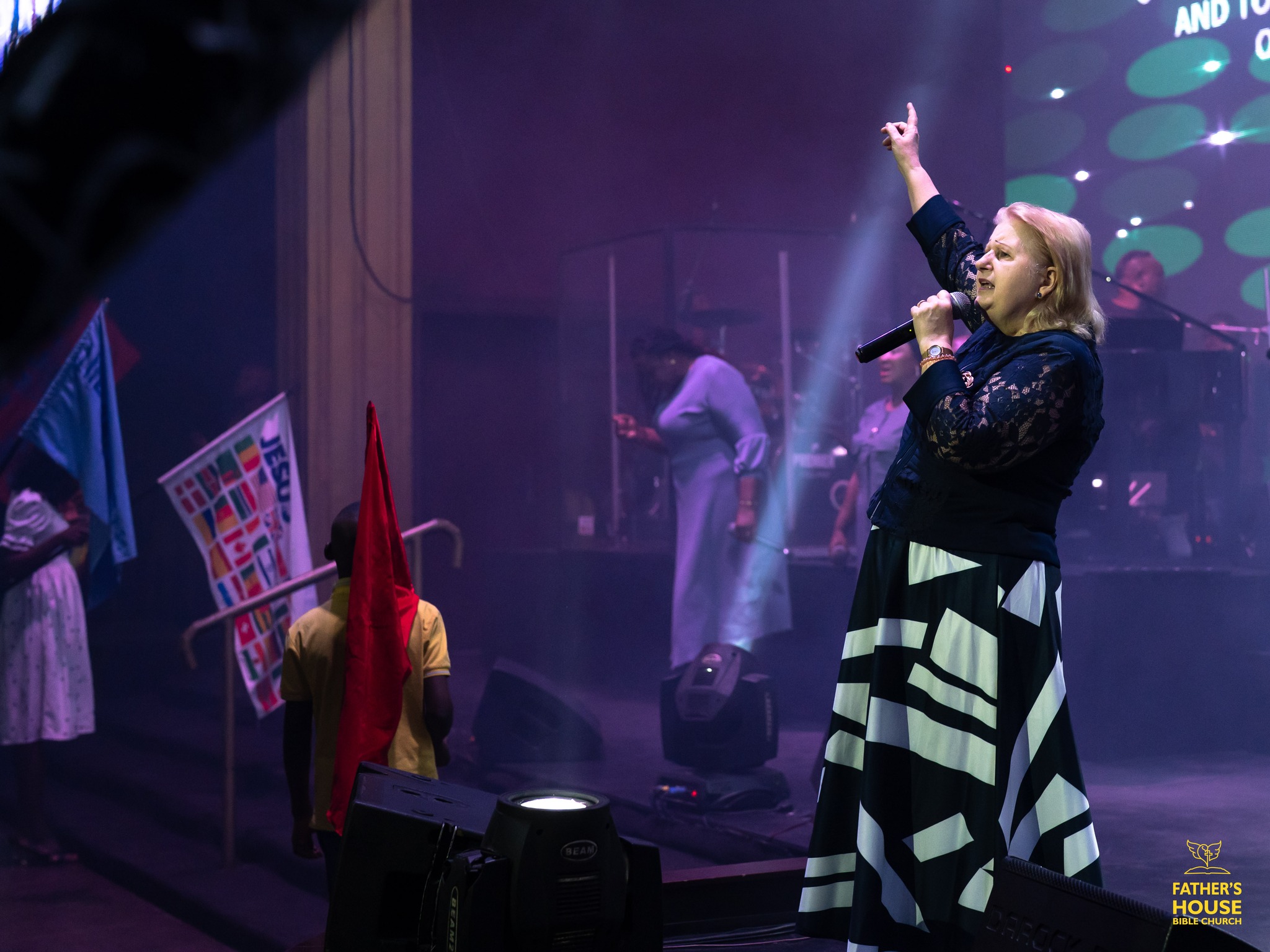
The Romans used banners or flags at the front of their columns of soldiers to allow the enemy to see who they were walking into battle with. They would place a golden eagle on the top of the pole. These were battle flags, proudly displayed and held high, so their soldiers knew where the line was and if they were advancing or retreating. When the flag was flying, you kept fighting. If the flag started to move quickly to the rear, this signaled a retreat. Those fighting would rally to the flag, in the hope of regrouping, reorganizing, and re-engaging in the fight. If the flag fell, the soldier closest to it dropped his weapon, lifted the flag up again, and kept moving forward. The flag was more important than his weapon. The flag was the weapon! By honoring and carrying the flag men were inspired to continue fighting. The banner identifies the position of the man giving orders who, with voice, trumpet or drum, will tell them what they need to do. The banner is the ‘heart’ of the unit, not just the pride of the men defending it, but also the ‘souls’ of those who have died for the unit in the past.
“We will rejoice in your salvation, And in the name of our God we will set up our banners! May the Lord fulfill all your petitions. 6 Now I know that the Lord saves His anointed; He will answer him from His holy heaven with the saving strength of His right hand. 7 Some trust in chariots, and some in horses; But we will remember the name of the Lord our God. 8 They have bowed down and fallen; But we have risen and stand upright” (Ps 20:5-8). The people celebrate the victory of their king during the war. Lifting banners is a public declaration of God’s presence with the army and that God granted them victory. Lessons: This king is Jesus Christ. We are His people. During life’s battles, we need to trust God for help and victory. We need to testify and celebrate the victory. We need to boldly proclaim our faith. We need to praise God individually and together, as a church family in corporate worship. Our God never fails! In Christ, our victory is sure! Amen!
In Christ, we are One Body under His banner called Love. “He has brought me to his banqueting place, And his banner over me is love [waving overhead to protect and comfort me]” (SS 2:4; AMP). There is a party going on. The word “banqueting place” means “the house of wine”. Wine means celebration and joy. This banquet is similar with the Wedding Feast of the Lamb and His Bride, the Church (Rev 19:9). The Bride did not enter this place of joy by accident. It is Jesus, her Beloved, who brought her in. His banner over her shows her identity and belonging. It also shows His protection and His public declaration of Love for Her. The banner is a sign of an intimate personal romantic sacrificial love between the Bridegroom (Christ) and the Bride (the Church). Lessons: As Jesus is not ashamed to tell the whole universe about His Love for us, we too must publicly declare our Love for Him, thru praise and worship. The banner of Christ’ Love is an invitation to come to the eternal joyful satisfying life found in Him alone! Selah!
 Green Pastures